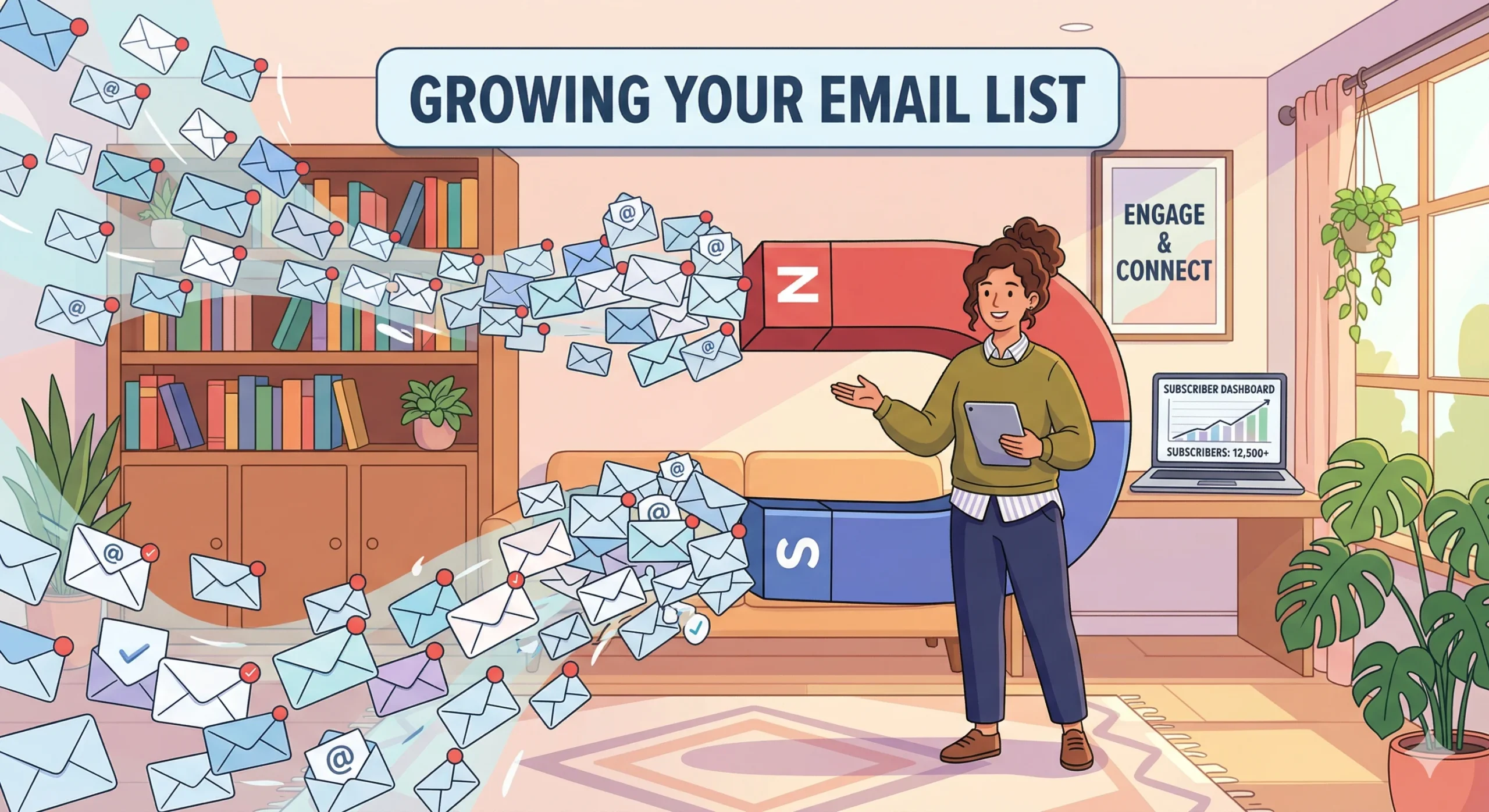
If you’re getting traffic to your blog but your email list is static, you have a conversion leak. It’s a frustrating place to be. You spend hours researching, writing, and promoting your content, only to watch your visitors leave and never come back. It’s like pouring water into a bucket with a massive hole in the bottom.
I’ve been there. In the early days of Digital Success Lane, I thought a simple ‘Subscribe’ button in my sidebar was enough. I was wrong. My conversion rate was abysmal – less than 0.5%. Today, my goal is always 5% or higher. The difference isn’t that I’m a better writer; it’s that I’ve mastered the best ways to turn blog traffic into email subscribers through behavioral psychological triggers and ‘value-first’ architecture.
In 2026, people are more protective of their email addresses than ever. They don’t want ‘updates.’ They want solutions. Here is the playbook I use to ensure that every visitor has a compelling reason to stick around.
The Power of the Content Upgrade
If you take only one thing away from this post, let it be this: Content Upgrades are the single most effective way to grow your list. A content upgrade is a bonus resource created specifically for a particular blog post. Unlike a general lead magnet that sits on your homepage, a content upgrade is contextually relevant to the exact sentence your reader just finished.
For example, if I write a post about How to Structure a Weekly Email Newsletter for Maximum Engagement, a perfect content upgrade would be a downloadable ‘Newsletter Layout Checklist’ or a pack of ‘5 Headline Templates.’
Because the reader is already interested in that specific topic, the upgrade feels like a natural continuation of the value they’re already getting. It doesn’t feel like an ad; it feels like extra credit. I’ve seen content upgrades convert at 10% or higher because they solve the exact problem the reader is thinking about at that moment. This ‘just-in-time’ value is what professional platforms like HubSpot have used to build some of the largest B2B email lists in the world. It’s about meeting the reader exactly where they are with exactly what they need next.
Quizzes: The Ultimate Interactive Hook
Static PDFs are great, but interactive content is better. In 2026, quizzes are one of the highest-converting lead magnets I’ve tested. Why? Because people love to learn about themselves. A quiz is a conversation, whereas a PDF is a monologue.
A quiz like ‘What’s Your Personal Newsletter Personality?’ or ‘Is Your Subscriber Retention Strategy Actually Working?’ creates immediate engagement. The visitor answers a few questions, gets a personalized score, and – here’s the kicker – they have to enter their email to get the full deep-dive report that explains their score.
Quizzes work because they are personalized, fun, and offer instant gratification. They also give you incredible data about your subscribers before they even join your list, allowing you to segment them correctly from day one. If someone takes my ‘SEO Audit’ quiz, I know exactly what kind of content to send them in their welcome sequence. It’s a win for the reader and a massive win for your long-term Newsletter Growth strategy. It’s the ultimate zero-pressure way to build a high-quality list.
The Strategic Inline Opt-In
Stop putting all your opt-ins in the sidebar. Sidebar blindness is real. Most readers are focused on the main content area, especially on mobile where the sidebar disappears entirely. If your conversion strategy depends on someone looking away from the content they came for, you’ve already made it harder for them to say yes.
I place ‘Inline’ opt-in forms directly within the text of my blog posts. But the placement is key. You can’t just drop them randomly. I look for ‘Attention Peaks’ in my analytics. These are the points where people are most engaged and most likely to be searching for a ‘what’s next.’ Typically, that is:
1. After the Introduction: They’ve read the hook and are excited to dive in. Offer them a summary or a ‘quick start’ guide here while the momentum is high.
2. In the Middle of a Deep-Dive: If they’ve read 1,000 words of a 2,000-word post, they are clearly committed. This is a great place to offer a ‘Download this as a PDF’ option so they can save it for later when they aren’t on a train or in a meeting.
3. At the Conclusion: They’ve finished the post and are wondering ‘what now?’ Give them the next logical step that takes them deeper into your world.
By embedding the form naturally in the reading flow, you’re making it as easy as possible for the reader to say yes without interrupting their ‘flow state.’
Exit-Intent: The Second-Chance Saver
I know, some people hate popups. I get it. But exit-intent popups work because they only trigger when a visitor is *already leaving*. You aren’t interrupting their experience; you are offering them a parting gift. It’s a last-ditch effort to keep the conversation going.
Tools like OptinMonster have made this extremely sophisticated. I set mine to trigger only when a user’s cursor moves toward the top of the browser window or toward the back button. My offer is always high-value and highly relevant. If they’re on a post about Best Newsletter Growth Strategies for B2B Startups, my exit popup might say: ‘Wait! Don’t leave without our B2B Referral Script Template. It’s what I use to get warm intros every single week.’
A surprising number of people – often 2% to 4% – will stop their exit to grab that resource. It turns a lost visitor into a long-term subscriber at the very last second. It’s the closest thing we have to a ‘save’ button for web traffic.
Actionable Micro-Assets Over Ebooks
In the old days of internet marketing, everyone offered a ‘Free 50-Page Ebook.’ Nowadays, people don’t have time to read a 50-page ebook. They want results, and they want them fast. They want ‘cheat codes’ for their professional lives.
I’ve found that ‘Micro-Assets’ convert much better than comprehensive guides. Think about what your reader can implement in the next 15 minutes to see a real change.
- A Checklist that ensures they don’t miss a step.
- A Template they can copy-paste into their own workflow.
- A Cheat Sheet that summarizes complex ideas into one page.
- A Resource List of the tools I personally use every day.
- A 1-Page Framework that gives them a new way to think about a problem.
These are ‘low-friction’ asks. They promise a quick win with minimal effort. When I replaced my ‘Master Guide to Email Marketing’ with a simple ‘Email Subject Line Cheat Sheet,’ my conversion rate tripled overnight. People want the ‘short cut,’ not the ‘long road.’ Give them the victory first; they’ll stay for the guide later.
The Psychology of Social Proof
People want what other people have. It’s a fundamental part of human psychology that hasn’t changed in thousands of years. In your opt-in copy, use social proof to build trust immediately and reduce the ‘risk’ of giving away an email address.
‘Join 5,000+ other founders’ or ‘As seen on…’ can make a massive difference. I also love the ‘Exclusive’ angle. Instead of just ‘Join my newsletter,’ I say ‘Join the Inner Circle’ or ‘Get access to my private weekly experiments that I don’t share anywhere else.’ This creates a sense of belonging and building a ‘moat’ around your content. If people feel like they’re getting a ‘behind-the-scenes’ look at your process – just like I share in my guide on SEO Tips for Growing an Email List Without Paid Ads – they are much more likely to subscribe. They don’t want to miss the ‘secret’ knowledge.
A/B Testing Your Call to Action (CTA)
A common mistake is to set a CTA and forget about it. I test everything – the color of the button, the text on the button, even the location of the form. You’d be surprised how much of a difference a single word can make.
I once changed a button from ‘Download Now’ to ‘Get My Free Checklist.’ The conversion rate jumped by 22%. Why? Because ‘Download Now’ sounds like a technical task. ‘Get My Free Checklist’ sounds like a benefit. Always focus on the ‘What’s in it for me?’ for the user. Test ‘Yes, I want this’ versus ‘Send me the guide.’ Test high-contrast colors like orange or green versus ‘safe’ colors like blue. Small tweaks lead to big gains over time.
The ‘Zero-Field’ Friction Test
Every field you add to your signup form reduces your conversion rate. It’s a direct correlation. Do you really need their phone number? Their company size? Their job title? If you aren’t using that data immediately to personalize their experience, you’re just hurting your growth.
In 2026, I aim for one field: Email. If I absolutely need their first name for personalization, I’ll add it, but I always test if the loss in conversion is worth the gain in personalization. Often, it isn’t. You can always ask for more info in your welcome sequence or through an ‘Update Preferences’ link later once the trust has been established. Start with the lowest friction possible to get them in the door; you can always ask for more once they see how awesome you are.
The Lifecycle of a Content Reader
Turning blog traffic into subscribers is just the first step in a much longer journey. Once they’re on your list, you need to deliver on the specific promise you made during the opt-in. This is where your welcome sequence and your consistent weekly structure come into play. If they signed up for an SEO checklist, your first five emails should be about SEO.
Remember, the goal of your blog isn’t just to ‘get the email’; it’s to build a relationship that lasts for years and eventually leads to a business outcome. Treat your conversion points as the start of a partnership. Be clear about what they’ll get, give it to them immediately without extra hoops to jump through, and then keep showing up with consistent, high-quality value. If you can do that, you’ll find that your blog isn’t just a place for content – it’s a powerful, automated growth engine that builds your most valuable business asset every single hour of every single day. I’m always testing new ways to tighten this loop, and I’d love to hear what’s working for you. Let’s keep building together and turning that ‘leaky bucket’ into a powerful reservoir of engaged fans.
Growing an audience takes time, consistency, and a deep understanding of what your readers actually want. By using these targeted conversion tactics, you can ensure that you aren’t just reaching people – you’re keeping them. Don’t leave your newsletter growth to chance; build a system that captures attention, provides immediate value, and turns casual visitors into lifelong community members.
Leave a Reply