I’ll be honest with you: last night, I spent forty-five minutes scrolling through reviews for a $12 silicone spatula. Twelve dollars! I looked at the five-star raves, but I spent most of my time hunting for the three-star reviews where people talk about the handle being ‘a little too bendy’ or the color being slightly off from the website photo. Why did I do that? Because even though the brand’s website had beautiful, high-definition videos showing the spatula flipping pancakes with the grace of an Olympic gymnast, I didn’t fundamentally believe them. I believed ‘SusanV84’ from Idaho. This, my friends, is the raw, unadulterated power of social proof. And in the complex, crowded world of 2026 e-commerce, it’s the invisible hand that moves the credit card from the wallet to the checkout button. We are all searching for a signal of reality in a sea of marketing polish.
The Evolutionary Root of the Review: Why Your Brain is Lazy
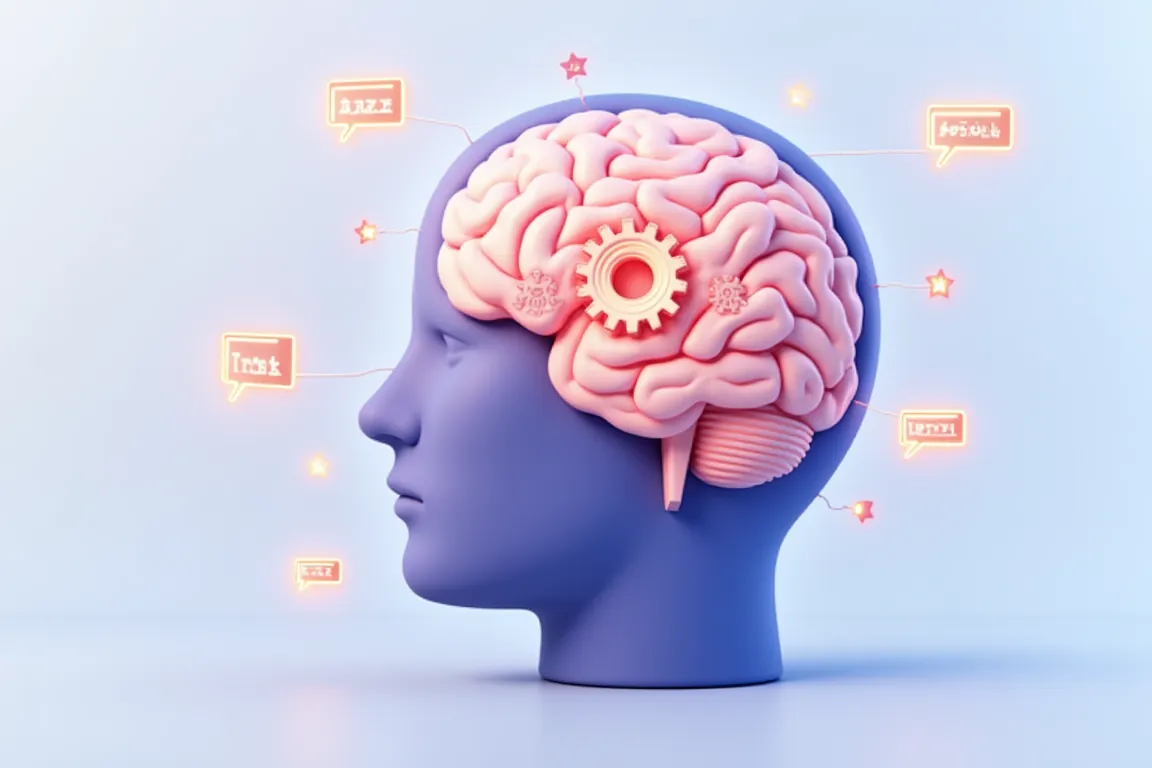
To understand why we trust a total stranger’s opinion over a billion-dollar brand’s elite marketing department, we have to look way back – like, ‘dodging-sabertooth-tigers’ way back in our evolutionary history. Our ancestors didn’t have the luxury of independent research or Google. If everyone in the tribe was suddenly running away from a particular cave, you didn’t stop to ask for a list of features and benefits of the cave. You just ran. We are biologically hardwired to look at the behavior of others to determine the ‘correct’ behavior for ourselves. This is what Psychology Today calls ‘informational social influence.’
It’s essentially a massive energy-saving shortcut for our brains. Instead of doing the hard manual work of evaluating every single product feature and technical spec, we just look at the crowd and think, ‘If they liked it and it worked for them, it will probably work for me too.’ In 2026 e-commerce, this shortcut is a psychological lifesaver. We are bombarded with an overwhelming number of choices. Thousands of spatulas, millions of skin moisturizers. Our cognitive load reaches a breaking point fast. So, we look for the signal in the noise. That signal is the review count, the average star rating, and the tone of the comments. It’s the digital version of choosing the crowded restaurant over the empty one. We instinctively go where the people already are. Trust is a collective effort.
The Trust Gap: Corporate Ads vs. Raw Human Authenticity
Brands have a massive vested interest in telling you their product is perfect. They *have* to say that to survive. Susan from Idaho, however, has absolutely nothing to gain (usually) by telling us the spatula handle is a bit too bendy for heavy flipping. This perceived lack of bias – this raw ‘disinterest’ in the financial outcome – is the cornerstone of social proof. When I see a customer photo in a review, I’m not just looking at the product; I’m looking for evidence of truth. I’m looking for the ‘reality’ that the brand might be polishing or airbrushing away in their expensive studio shots.
This is exactly what I discussed in my previous deep-dive into the impact of customer photos on conversion rates – the visual evidence of trust. Research by Robert Cialdini, the recognized godfather of influence, highlights that ‘consensus’ is one of the six key principles of human persuasion. When we aren’t sure what to do, we look to those who are similar to us for guidance. This is why ‘people also bought’ sections and ‘verified reviewer’ badges are so incredibly effective at the point of sale. They tell us that people who share our values and needs have already made the dangerous leap and survived and thrived. It removes the fear of being the ‘guinea pig’ for a new brand. You aren’t alone in your purchase.
The Bandwagon Effect, FOMO, and Social Urgency
Beyond simple trust, social proof also taps into our deep-seated, biological fear of missing out (FOMO). If a product has ten thousand glowing, active reviews, we don’t just think it’s a good product – we start to think it’s a *movement*. We want to be part of the group that ‘gets it’ and is enjoying the benefits. This is the ‘Bandwagon Effect.’ When you see a notification that says, ’34 people are looking at this item right now,’ or ‘Sold 500 times in the last 24 hours,’ your brain shifts instantly from rational evaluation to emotional urgency.
You don’t want to be the one left behind with the old-fashioned, bendy spatula while everyone else in your digital tribe is flipping pancakes like pros. This psychological pressure is intense and often bypasses our logical filters entirely. It’s why high-ticket e-commerce brands focus so much on community building and shared identity. They want to create an environment where buying the product feels like joining a prestigious club or a supportive family. For entrepreneurs, understanding this shift is crucial for long-term survival. You aren’t just selling a widget; you’re selling a ticket into a community of satisfied, like-minded users. This is a high-value skill that separates the category leaders from the also-rans. You are building a tribe, not just a customer list.
The Power of the ‘Middle’ Review: Why 4.2 Stars Beats 5.0
Interestingly, perfect five-star ratings can actually *lower* consumer trust in 2026. If I see a product with 1,000 reviews and every single one is a glowing five stars, my ‘scam’ alert starts screaming. We are a generation of shoppers who expect a little bit of friction and variety. We know instinctively that no product is perfect for everyone in every situation. This is why those ‘honest’ three and four-star reviews are so incredibly valuable for your overall conversion rate. They provide the necessary contrast that makes the five-star reviews feel real and earned.
I always tell my consulting clients to openly embrace ‘constructive’ feedback. A review that says, ‘The color was slightly darker than the studio photo, but the build quality is actually amazing,’ is significantly more persuasive than a review that just says, ‘Best thing ever!’ The first one is a real story; the second one is just a marketing slogan. Stories sell because they feel human and nuanced. They feel like a helpful conversation you’d have with a friend over coffee. And in e-commerce, the more you can make your entire site experience feel like a helpful, honest conversation rather than a aggressive sales pitch, the higher your long-term conversion and customer lifetime value will be. Authenticity has a much higher ROI than a perfect image.
Applying Psychologically-Driven Social Proof Without Being Manipulative
So, how do you actually use this psychological knowledge without being ‘manipulative’ or ‘slimy’? It’s all about radical transparency. Use tools that highlight real-time activity, but make sure it’s *100% real*. Shoppers in 2026 can smell a fake ‘recent purchase’ pop-up from a mile away, and once trust is broken, it’s rarely ever recovered. Showcase your ‘Verified Buyers’ prominently and let them be the heroes of your page. Display customer photos and videos not just on product pages, but in your marketing emails, your retargeting social ads, and even your print materials.
Let your existing customers do the heavy lifting of persuasion for you. According to research from Nielsen, 92% of consumers trust earned media – such as recommendations from friends and family and authentic reviews – above all other forms of traditional advertising. Also, consider the balance between ‘Expert’ and ‘Peer’ social proof. For some complex products, we want an expert’s validation (like a doctor or a certified professional chef). For others, we want a peer’s validation (someone who lives a life like ours). A mix of both is the gold standard for high-converting sites. Show the professional accolades and awards, but give just as much screen real estate to the ‘moms of three,’ the ‘small business owners,’ or the ‘weekend hikers.’ This covers all your psychological bases and ensures no segment of your audience feels excluded.
Building a Sustainable Trust Ecosystem for Your Brand
Social proof shouldn’t be a one-off feature or a plugin you install and forget. It should be a complete, living ecosystem that surrounds your brand. From the moment someone lands on your homepage to the moment they receive their post-purchase ‘thank you’ email, they should feel surrounded by a thriving community of happy, vocal users. This constant, subtle reinforcement is what slowly chips away at their natural defense mechanisms and skepticism. It’s exactly like building a freelance portfolio – you don’t just show one lucky project; you show a massive body of work that proves your consistency, quality, and reliability over time.
When your customers feel like they are part of something bigger and more meaningful than just a transaction, they become your best and most loyal marketers. They’ll defend you in comments, they’ll share your posts without being asked, and they’ll keep coming back for years. Because at that point, they aren’t just buying a kitchen spatula or a piece of software; they’re buying into the Digitalsuccesslane philosophy of quality, community, and authenticity. They’re buying into the same tribe that Susan from Idaho and I belong to. You are creating a shared reality.
The Future of Social Proof and Tribal Trust
Social proof is much more than just a clever marketing tactic; it’s a fundamental, unchangeable part of human nature that has existed for millennia. By deeply understanding the evolutionary psychology behind *why* we trust reviews and follow the crowd, you can build an e-commerce brand that speaks directly to the core needs and instincts of your customers. It’s about moving beyond the ‘sell’ and toward the ‘solve.’ It’s about building a tower of trust, one bendy spatula review at a time. To see how these deep psychological principles apply to the specific visual aspects of your online store, check out my guide on UGC product page best practices where I break down the layout of a perfect, social-proof-driven page that converts like crazy. The future of e-commerce is human, and social proof is the language of that humanity.
Leave a Reply