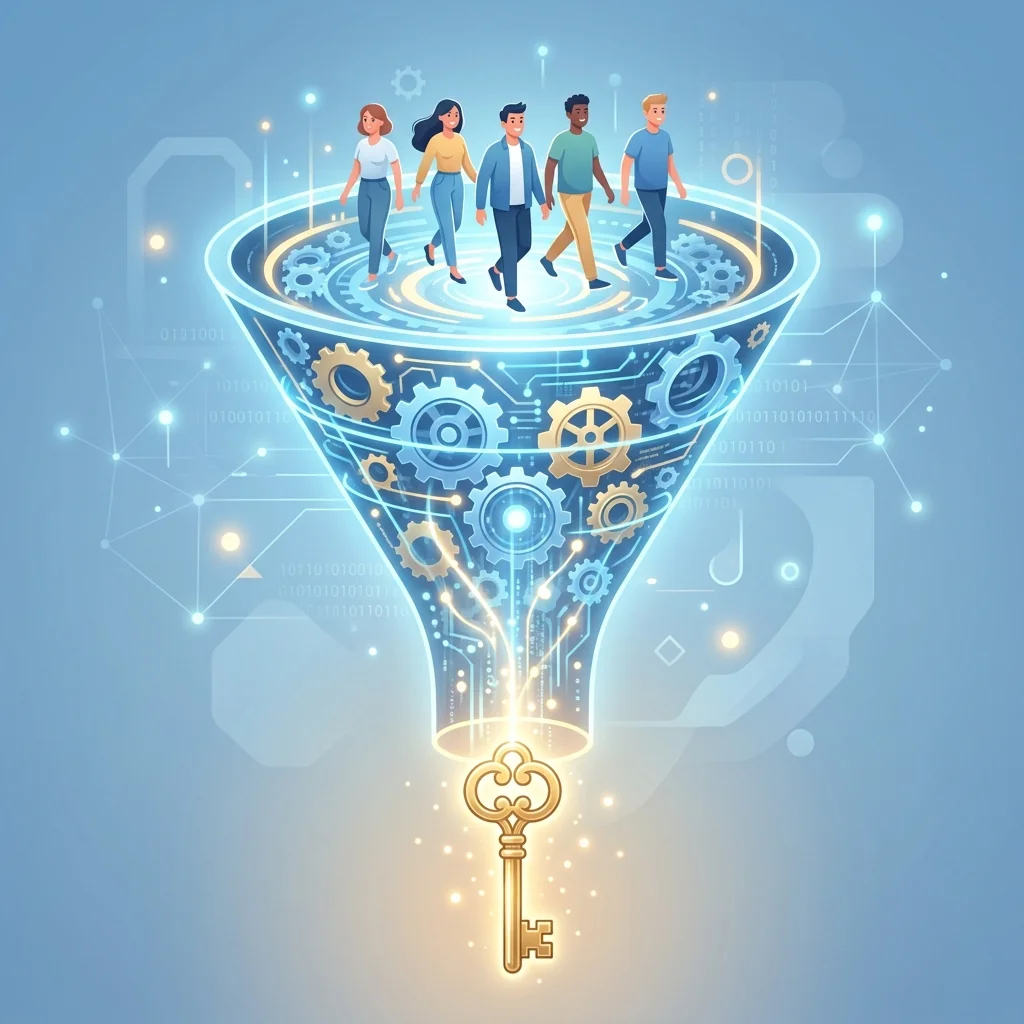
If you have been following Digital Success Lane for a while, you know that I am a huge advocate for moving away from the “churn and burn” model of affiliate marketing. We have talked about switching-to-high-ticket-affiliate-marketing-guide and the incredible payouts available in the SaaS space. But there is one technical piece that sits at the center of all high-ticket success: the funnel.
In the low-ticket world, a “funnel” is often just a blog post with a lot of buttons. You hope that people read, get excited, and click. But for a product that costs a thousand dollars or more, that approach fails 99% of the time. High-ticket buyers are skeptical. They are analytical. And they require a structured journey from “curious” to “confirmed.”
Today, I am going to show you exactly how to build a high-ticket affiliate marketing funnel that doesn’t just get clicks, but actually converts high-value leads into massive commissions. We are going to look at the architecture of a “Bridge Funnel” and how to use modern assets like VSLs and automated nurture sequences to close deals while you sleep.
The Architecture of a High-Ticket Bridge Funnel
The “Bridge Funnel” is the gold standard for high-ticket affiliates. It is called a bridge funnel because its job is to bridge the gap between the audience’s problem and the advertiser’s solution. It allows you to inject *your* authority into the process before the visitor ever sees the sales page.
Here is the four-step structure we use:
1. The Opt-in Phase: A simple, high-converting landing page.
2. The Authority Phase: A “Thank You” page or VSL.
3. The Nurture Phase: An automated email sequence.
4. The Conversion Phase: The affiliate offer itself.
Let’s break each of these down so you can build your own.
Phase 1: The Opt-in Phase (Lead Capture)
Your first goal is to get the visitor off of an ad or a social platform and onto your email list. If you don’t capture the lead, you lose the ability to follow up, and in high-ticket marketing, the follow-up is where 80% of the money is made.
Your landing page should be extremely focused. No navigation bars, no “about” sections, and no distracting links. It should have one clear promise. I often use a lead magnet that is directly tied to the high-ticket product I am promoting.
For example, if I am following my high-ticket-saas-affiliate-marketing-strategy and promoting a premium CRM, my lead magnet might be “The 2026 Sales Pipeline Audit Checklist.” This attracts people who are already thinking about their sales process – making them the perfect leads for a CRM. I often use platforms like ClickFunnels or GoHighLevel to build these pages because they allow for rapid A/B testing and seamless integration with email providers.
Phase 2: The Authority Phase (The VSL/Bridge Page)
Once they enter their email, they should be redirected immediately to a “Bridge Page.” Most people just send them to a page that says “Check your email.” That is a wasted opportunity.
Instead, you want to show them a Video Sales Letter (VSL). This video doesn’t have to be high-production. A simple screenshare or a headshot video works perfectly. The goal of this video is three-fold:
- Confirm the Lead Magnet: Tell them their gift is on its way.
- Explain the Problem: Agitate the pain point they are feeling.
- Introduce the Solution: Explain *why* the high-ticket product you are promoting is the best way to solve that problem.
By appearing on video, you become a real person to them. You are no longer just a “link” on a website; you are a consultant providing a solution. This is how you implement professional client-acquisition-strategies into an automated affiliate model.
Phase 3: The Nurture Phase (Automated Emails)
This is where the magic happens. A high-ticket buyer might visit your site today but not be ready to buy for three weeks. The nurture sequence keeps you top-of-mind.
I recommend a 7-day sequence that follow this structure:
- Day 1: The Value Add. Send them their lead magnet and provide a “quick win” tip.
- Day 2: The “Me Too” Story. Talk about a time you struggled with the same problem they have.
- Day 3: The Case Study. Show real-world results from someone using the product.
- Day 4: The Objection Handler. Address the “It’s too expensive” or “I don’t have time” objections.
- Day 5: The Logic. Explain the technical or strategic reasons why this specific tool is better than the competition.
- Day 6: The Bonus. Offer an exclusive bonus (like a 30-minute call or a custom template) if they buy through your link.
- Day 7: The Deadline. If there is a limited time offer, remind them.
This sequence does the heavy lifting for you. It handles the skepticism and builds the trust required for a thousand-dollar purchase.
Phase 4: The Conversion Phase (The Offer)
The final step is the affiliate offer itself. Because of the work you have done in the previous three phases, the visitor is arriving at the sales page with a high level of “pre-framing.” They aren’t just looking at a tool; they are looking at the *solution* you recommended.
I always recommend adding a “bonus stack” to your high-ticket offers. High-ticket products often have a lot of competition. If ten people are all promoting the same software, why should they buy from you? By offering a unique, high-value bonus that complements the product, you make your link the obvious choice.
Optimizing for High-Ticket Conversions
Building the funnel is only half the battle. You have to optimize it.
- A/B Test your Headlines: A 1% increase in opt-in rate can result in thousands of dollars in profit over a year.
- Monitor your VSL Watch-Time: If people drop off after 30 seconds, your hook isn’t strong enough.
- Track Open Rates: If your emails aren’t being opened, your subject lines are failing.
I treat my funnels like a living ecosystem. I am constantly tweaking and refining based on the data. It is a more technical approach than standard blogging, but the ROI is infinitely higher. I discuss these refinement techniques often in my guides on freelance-pricing-strategies – it is about valuing your own time and the quality of your leads.
The Psychology of the High-Ticket Buyer
Understanding the funnel structure is one thing, but understanding *why* it works is another. High-ticket buyers are driven by three primary psychological triggers: Authority, Social Proof, and the “Cost of Inaction.”
1. Authority: In a sea of options, people want to be led by an expert. By providing deep-dive content and showing your own technical setup, you check this box. They aren’t just buying a product; they are buying into your expertise.
2. Social Proof: For a $1,000+ purchase, people need to know they aren’t the first ones. This is why I focus so heavily on case studies. You need to show that “someone like them” achieved “a result like this” using “a tool like that.”
3. The Cost of Inaction: This is a key part of my VSL strategy. I don’t just talk about what they will gain; I talk about what they are *losing* by staying as they are. This “opportunity cost” is often more motivating than the potential gain.
By weaving these triggers into your bridge page and your emails, you align your funnel with the natural decision-making process of a sophisticated buyer. This level of psychological alignment is what I teach in my high-ticket-affiliate-sales-webinars – it is about moving from “convincing” to “compelling.”
The Power of Strategic Retargeting
Even with the best funnel, not everyone will opt-in or buy on the first day. This is where retargeting comes in. By using a simple tracking pixel, you can show ads to people who have visited your bridge page but haven’t clicked the affiliate offer.
Your retargeting ads shouldn’t just be “buy this now.” They should provide even more value.
- “Did you miss the ROI calculator on my last page?”
- “Watch this new case study of a user who doubled their revenue.”
- “The top 3 questions I get about [Product Name].”
Retargeting keeps the conversation going and significantly reduces your cost-per-acquisition over time. It is a more advanced part of the client-acquisition-strategies but is essential for scaling a high-ticket business.
Optimizing CTAs for High-Ticket Offers
In the low-ticket world, “Buy Now” works. In the high-ticket world, “Learn More” or “Book a Strategy Call” is often much more effective. You want the click to feel like the start of a journey, not a commitment to a purchase.
Use action-oriented, benefit-focused language in your buttons:
- “Get My Free Profit Audit”
- “Watch the Full Case Study”
- “See the 2026 ROI Framework”
By lowering the “perceived commitment” of the click, you increase your click-through rate while still maintaining the quality of the lead. Focus on the *next step*, not the *final sale*.
The Ethical Funnel Mindset
I have to mention ethics here. A “funnel” can sometimes sound like a trap, but it should be exactly the opposite. It should be a service. You are guiding someone from a place of confusion and pain to a place of clarity and solution. You are acting as a filter, helping them avoid expensive mistakes and directing them toward high-quality tools.
If you use high-pressure tactics or make false claims in your VSL, you might get a quick sale, but you will never build a long-term business. High-ticket buyers have long memories. Use your funnel to build a relationship, not just to “trap” a lead. This is the cornerstone of the success model we build at Digital Success Lane. We value the relationship over the single transaction.
Closing Thoughts
Building a high-ticket affiliate marketing funnel is the most important skill you can learn in 2026. It is the differentiator between those who make a few hundred dollars a month and those who make five or six figures. It allows you to scale your impact while maintaining a high level of personal authority. It is about creating a system that reflects your professional standards.
Don’t send another cold click to an affiliate link. Take the time to build your bridge funnel. Capture the lead, build the trust, and let the automation handle the heavy lifting. It might take more work to set up, but when those high-ticket commissions start hitting your account consistently, you will realize it’s the only way to play the game. It is time to build your own bridge to success and enter your professional success lane for the long haul. We are excited to see what you build.
Leave a Reply