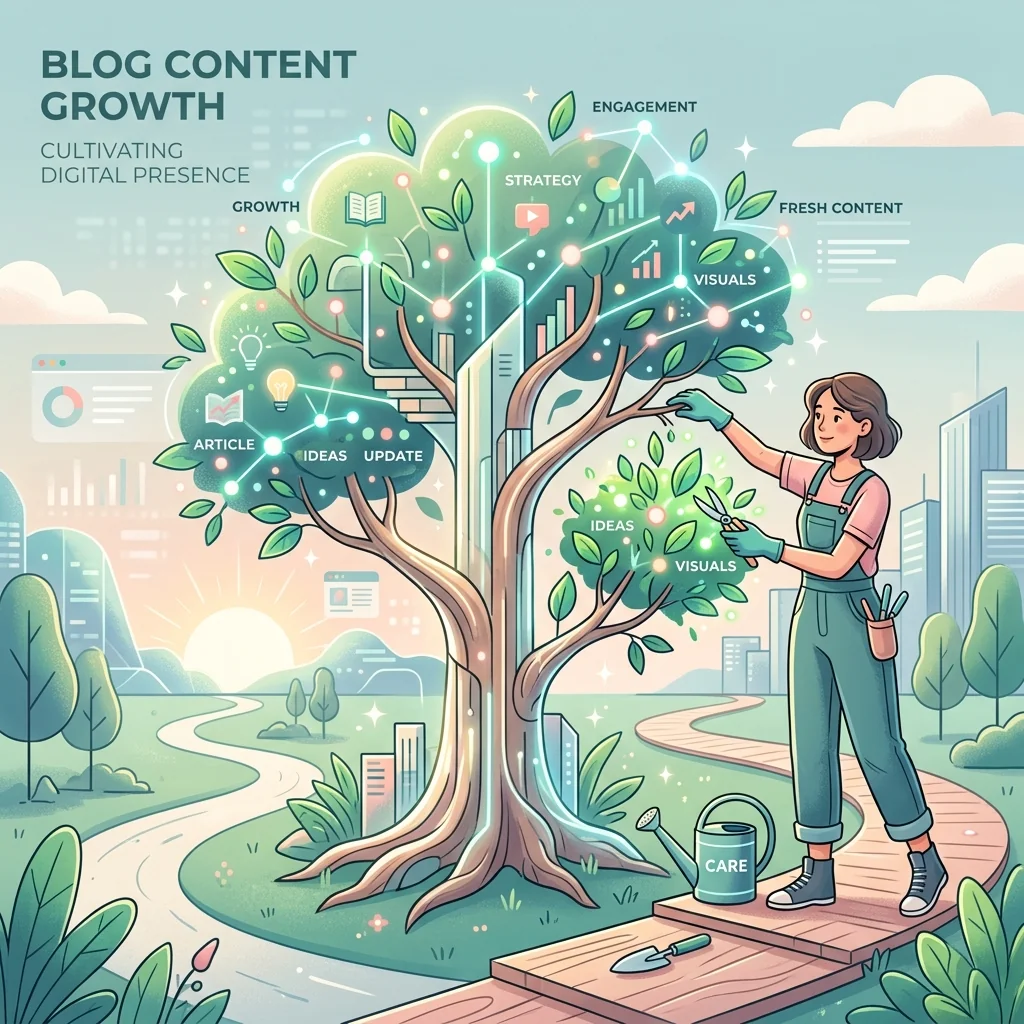
One of the most dangerous myths in startup marketing is the idea of ‘Evergreen Content.’ We’ve all been told that if you write a great guide once, it will sit there forever, ranking #1 and driving leads while you sleep. But today, the internet is not a static library; it is a rapid, ever-changing river. The information flows too fast, and the algorithms have become too obsessed with ‘Freshness,’ ‘Accuracy,’ and ‘Timeliness’ for any piece of content to stay evergreen without active, deliberate maintenance.
If you don’t have a systematic process for updating your content, your authority will slowly but surely bleed out. We call this ‘Content Decay,’ and it is the quiet killer of startup growth. If you want to stay relevant in the age of AI and Answer Engines, you need to learn how to maintain content pillars as living assets. This is the final, non-negotiable step in defining your content pillars for long-term survival in a competitive market.
The Reality of Content Decay (The Quiet Killer of SaaS Metrics)
Decay happens when your content remains stationary while the world moves on around it. It’s not just about one day being #1 and the next being #10; it’s a slow erosion of trust.
- A tool you recommended as ‘cutting edge’ two years ago goes out of business or pivots.
- A statistic from 2023 becomes irrelevant or misleading in the context of.
- A new competitor publishes a ’10x’ deeper, multi-media guide that steals your semantic authority and your visitors.
Search engines like Google and AI models like Gemini are now smart enough to detect this decay in real-time. They see the ‘Freshness Gap’ – the distance between your information and the current state of the industry – and they begin to deprioritize your content in favor of sites that are being maintained. This is why measuring success metrics every month is so important; it’s your early warning system that a pillar is starting to slip into decay.
The Cost of Inaction: A Cautionary Tale
I’ve seen startups lose 40% of their organic lead flow in a single quarter simply because they stopped ‘watering’ their pillars. They thought they had ‘won’ SEO and could move the entire budget to paid ads. Within months, their Page 1 rankings for core head terms were replaced by agile competitors who were doing weekly ‘micro-updates.’ Once you lose that momentum, it costs twice as much to earn it back. Maintenance is cheaper than reconstruction.
Freshness Signals: Beware of “Fake Freshness”
In the past (the ‘dark ages’ of 2022), you could trick Google by simply updating the ‘Published Date’ in your CMS on an old post. In, this is called ‘Fake Freshness,’ and it is a fast track to a trustworthiness penalty or a full-scale manual demotion.
Modern algorithms look for Substantive Semantic Updates. They compare the current version of your pillar to the previous cached one and they look for the ‘Semantic Delta’ – the actual change in meaning and value.
- Did you add high-resolution images or original data?
- Did you update the external links to high-authority, sources?
- Did you add a new section on a current trend or technology?
- Did you answer new questions that have appeared in the social media discourse recently?
If the delta is too low, the update is ignored by the crawlers. To stay on top, you need to provide at least a 15-20% ‘New Value’ increase every time you refresh a major pillar.
The Volatility Triage Protocol: What to Update First
You can’t update everything at once. Your team has limited hours. You need to be a digital trauma shooter. Use the Volatility Triage Protocol to prioritize your efforts:
1. High-Performance / Shrinking (Priority 1): These are pillars that drive 80% of your revenue but have seen a 10-20% traffic drop in the last 60 days. Update these immediately with fresh data and experts quotes to stop the bleeding.
2. High-Potential / Stable (Priority 2): These are pillars currently ranking on Page 2 (spots 11-20). A deep update with a high ‘Semantic Delta’ can often provide the necessary signal to push these into the Top 3 ‘Money Spots.’
3. Low-Value / Old (Pruning candidates): If a pillar is three years old and drives zero business value, don’t update it – prune it. In, a smaller, high-authority site is better than a massive, thin one full of outdated junk. This helps you avoid common content planning mistakes.
Leveraging User Feedback for Systematic Maintenance
Your readers are your best auditors. Look at the comments, the support tickets, and the internal search queries on your site. Are people asking for things that your pillar doesn’t cover yet?
- Step 1: Add a ‘Was this helpful?’ widget to every pillar.
- Step 2: Collect the ‘No’ responses and look for patterns.
- Step 3: Use those gaps to write your next cluster post or add a new section to the pillar. This human-in-the-loop strategy ensures your content stays grounded in reality, which is a key part of the role of AI in pillar creation.
Technical Maintenance: The Plumbing Check
Maintenance isn’t just about the words and the meaning; it’s about the technical ‘Plumbing’ that allows your site to even function in the eyes of a crawler.
- Link Audits: Check every single internal link in your Hub-and-Spoke model. Replace broken ones and ensure anchor text is still descriptive and relevant to the linked page.
- Schema Updates for AI Overviews: In, FAQ and Article Schema need to be tighter than ever to show up in AI search summaries. Ensure your structured data reflects your newest, updated content.
- Mobile UX & Speed: As you add more visual elements to boost your SEO authority, ensure your images are compressed and your site still passes the ‘Core Web Vitals’ for mobile users.
The Quarterly Audit Workflow: A 90-Day Rhythm
Successful marketing teams build a recurring cycle for maintenance so it doesn’t feel like a chore. Here is our recommended 90-day rhythm:
1. Day 1-10: Run a ‘Content Decay’ report in Ahrefs or Semrush. Identify the Priority 1 and 2 assets that need love.
2. Day 11-20: Assign a subject matter expert (SME) from your product or sales team to review the top 5 pillars for factual accuracy.
3. Day 21-60: Produce the ‘Semantic Delta’ – new sections, new visuals, new data. Use modern AI tools to speed up the drafting and brainstorming phase.
4. Day 61-80: Update the technical tags, Schema, and internal links.
5. Day 81-90: Re-promote! An update is a legitimate reason to re-share on social media and in your email newsletter as ‘New for the future.’
According to marketing statistics from Statista, maintenance and updating are the most overlooked high-growth drivers in the current digital landscape.
A content pillar is not a static statue you carve once and admire from afar; it is a living garden that requires the constant attention of an expert gardener. If you stop watering it, it will surely die. But if you treat it as a living, breathing part of your brand architecture, it will grow more powerful, more authoritative, and more profitable every single year. In, authority is earned through consistency and relentless accuracy over time. Don’t be the group that builds a beautiful house of content and then lets the weeds of decay take over. Maintain your pillars, refresh your collective knowledge, and show the world that you are the permanent, trustworthy owner of your niche.
FAQ
How often should I do a ‘deep semantic update’ vs a ‘light technical refresh’?
I recommend a light technical refresh (checking links and dates) every single quarter, and a deep semantic update (adding 20% new value and sections) every 12 months for your top 5 high-traffic pillars.
What if my pillar is still ranking #1 – do I really still need to update it?
Yes, absolutely! In fact, that is the most important time to perform an update. If you are #1, every competitor is trying to build a better guide to knock you off your throne. Updating while you are on top ensures you stay there by maintaining the gap in quality.
Does updating an old post’s content affect its URL or PageRank?
As long as you keep exactly the same URL (don’t change the slug!), you will keep 100% of your existing authority and PageRank. Changing the slug is one of the most common mistakes of pillar maintenance which leads to lost traffic.
Should I delete old cluster posts that are no longer performing?
This is a strategy called ‘Content Pruning.’ If a post has zero traffic, zero backlinks, and provides no service to the user, you should 301-redirect its URL to your main pillar and delete it. This concentrates your site’s ‘link juice’ and authority into the pieces that actually matter.
How do I effectively tell my audience that a pillar has been updated?
Add a prominent ‘Updated for the future’ badge at the very top of the page and send a specialized, value-first email to your list highlighting exactly what the new sections cover. People love to see that a brand they trust is taking the time to keep its information current and expert-level.
Leave a Reply