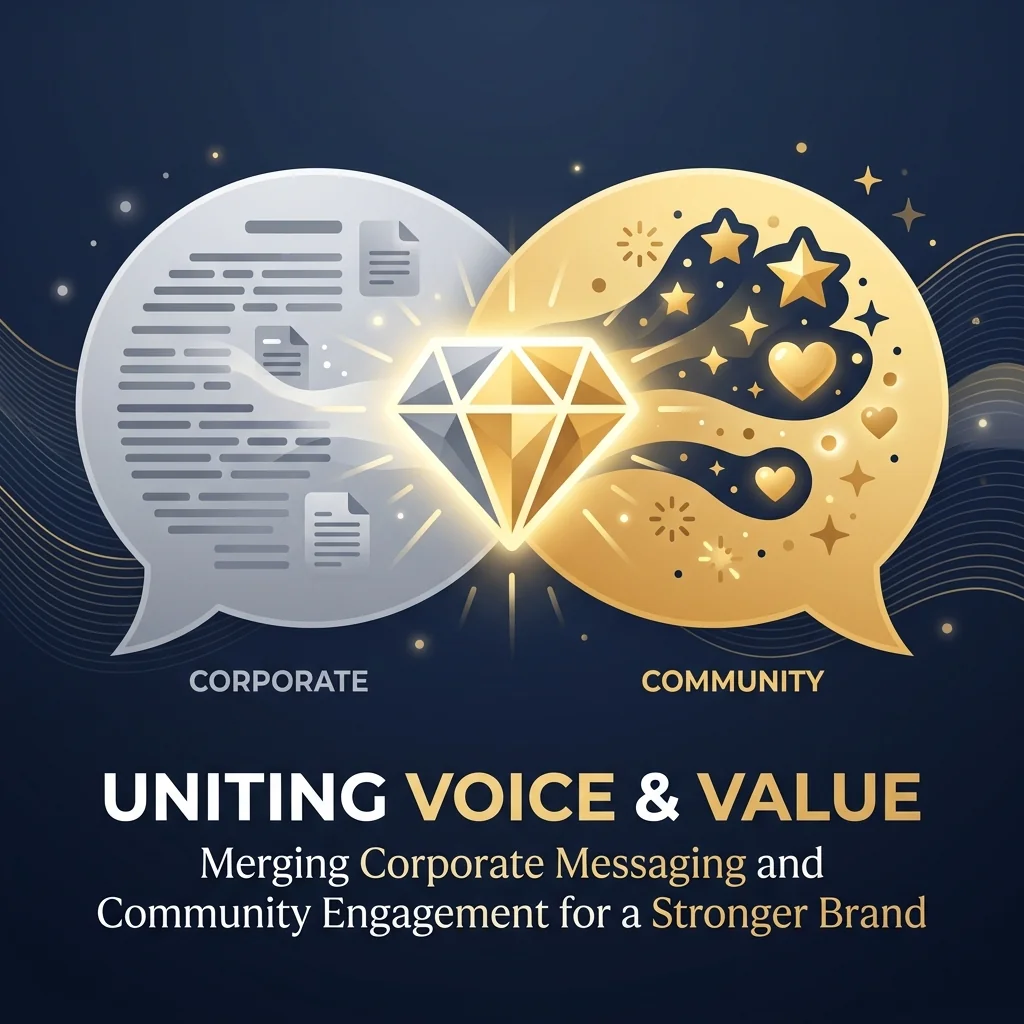
I want you to imagine a high-level, expensive marketing boardroom in a skyscraper in 2026. A group of seasoned creative directors and brand strategists are arguing passionately over whether the new brand voice should be ‘Sleek and Minimalist’ or ‘Playful and Disruptive.’ They are looking at beautifully designed mood boards, high-res competitor analysis, and demographic data. But they are missing the most important, most powerful voice in the entire room: the raw, unedited, and honest voice of the existing customer.
While these executives are arguing, their customers are already out there in the real world, writing thousands of reviews, and telling the brand exactly who they are, what they value, and how they want to be spoken to. This is the definitive guide to refining your brand voice through customer reviews. In the late 2020s, the most successful and resilient brand voices aren’t invented in vacuum-sealed boardrooms; they are ‘Discovered’ and ‘Refined’ through deep, systematic listening. Your customers are effectively your best copywriters and brand architects. Listen to them and they will build your brand for you.
The Vacuum Problem: Why Corporate Voices Fall Flat in the 2026 Market
Most brand voices are unfortunately created in a psychological vacuum. They are based on an idealized, often unrealistic version of what the company *wants* to be perceived as, rather than the cold, hard reality of what the customer actually *needs* them to be in their messy daily lives. This lead to a profound and costly ‘Brand Dissonance’ between the brand’s high-gloss marketing messages and the customer’s actual, physical experience.
When a brand sounds too polished, too safe, or fundamentally disconnected from its core community, trust evaporates instantly in the high-skepticism era of the web. Direct customer reviews are the ultimate antidote to this corporate dissonance. They provide a raw, honest, and unedited look at the real-world emotions, specific pain points, and ‘Vernacular’ of your most active audience. This is a core part of the philosophy behind niche marketing with UGC – the process of learning the internal, secret language of your tribe. By listening deeply to your reviews, you aren’t just gathering feedback; you are stealing a blueprint for your entire future brand identity and voice. It’s a key part of your high-value skill selection – moving your brand from a ‘Broadcast’ model to a ‘Resonance’ model. You stop talking at them and start talking with them. Resonance is the new frequency of growth.
Mining the ‘Lexicon of Loyalty’: Speaking the Natural Language of Your Tribe
Every dedicated audience or niche tribe has its own unique ‘Lexicon’ – a specific, often secret set of words, phrases, and metaphors they use to describe their problems and your specific solutions. If your customers are consistently calling your product ‘The absolute life-saver for busy, multi-tasking parents’ in their reviews, but your website copy says ‘We are the premier organizational solution for the modern household,’ you have a significant and costly language gap. You are missing your own customers’ signals and forcing them to translate your corporate jargon into their real-world needs.
Mine your review database for these recurrent, ‘Magic Phrases’. Look for the specific adjectives and verbs that appear most frequently in your 5-star reviews. Are they calling your brand ‘Reliable and Gritty,’ or ‘Honest and Transparent,’ or perhaps ‘Efficient and Cool’? Mirror these exact words and sentence structures back in your homepage copy, your email subject lines, and your ad headlines.
This doesn’t just increase your technical SEO relevance for the long-tail keywords people actually use; it builds an immediate, deep-seated psychological bond of familiarity. The customer feels seen, heard, and understood on a primal level. According to research from Brandfolder, consistent and authentic brand voicing across all digital channels (informed by real customer data) can increase your recurring revenue by up to 23% by reducing churn and increasing affinity. You are essentially letting your happiest and most vocal customers write your most effective sales copy for you for free. They speak the truth that converts.
The ‘Authenticity Correction’: Moving Beyond Scripts in Negative Feedback
Negative reviews are often seen as a shameful problem to be hidden or ‘handled’ by PR and legal. In the transparency-led world of 2026, they are actually your most valuable and rapid ‘Authenticity Correction’ tool for your brand tone. If multiple customers are saying your brand feels ‘a bit arrogant,’ ‘unreachable,’ or ‘frustratingly slow to respond,’ that is a clear, diagnostic signal that your current brand voice is missing the mark on fundamental human empathy and accessibility.
Use this ‘uncomfortable’ feedback to pivot your tone towards humanity. If you are being perceived as ‘too corporate and cold,’ inject more raw humanity, direct accountability, and even strategic vulnerability into your public communications. This ‘Authenticity Correction’ is exactly what builds the kind of long-term brand loyalty that survives market downturns and competitive shifts. It shows that you are a living, breathing, and humble brand that actually cares about the long-term health of its community. It’s a vital, ongoing step in building a community of brand advocates – where the brand identity evolves dynamically and organically along with the community’s needs. Don’t hide from the ‘Mean’ reviews; lean into them to find the vocabulary of improvement. Criticism is just feedback in a loud wrapper.
Discovering New Narratives: Customer Reviews as Your High-Value Creative Source Material
Often, deep-diving into customer reviews will reveal surprising use-cases and narratives for your product that you and your internal product team never even imagined. I once worked with the founder of a specialized industrial tool company who found that their ‘Heavy-Duty Winch’ was being discussed in a large online community of ‘Serious Backyard Gardeners’ as a tool for pulling out old, stubborn tree stumps without a tractor. This ‘Discovered Use-Case’ provided an entirely new, highly profitable direction for their brand storytelling and voice.
They stopped sounding like an industrial supplier and started speaking the patient, result-oriented, and slightly obsessive language of the high-end gardener. This level of strategic pivot is only possible if you are systematically listening to your reviews as if they were creative briefs written by experts. It turns your reviews into the ‘Source Code’ for your next big product launch or campaign. According to data from Canto, brands that use user-generated feedback to actively inform their creative content strategy see a 50-60% increase in content engagement rates on social. You are no longer guessing; you are finding the ‘Winning Story’ already hidden in the ‘Review Data’. Reality is your best script.
Digital Empathy and the Future of Curation
How do you actually integrate this deep, intensive listening into your daily brand operations without getting overwhelmed by the sheer volume of data? You need a systematic ‘Review-to-Voice’ Workflow of 2026 technical standards:
1. AI Sentiment Tagging: Use specialized AI tools to automatically tag every single review by ‘Primary Emotion’ (e.g. Joy, Relief, Frustration) and ‘Key Functional Phrase.’
2. The Monthly Language Audit: Have your creative and social team review the top 10 most frequent ‘Customer Phrases’ every month to see if they are appearing prominently on your high-traffic pages and ad sets.
3. Dynamic Living Guidelines: instead of a static, boring brand book PDF, keep a ‘Living Voice Guide’ that is updated quarterly based on the evolving language and concerns of your reviews.
4. Mirror Testing (A/B): Regularly A/B test your new, review-informed copy against your old ‘Branded’ or ‘Agency’ copy. Measure which one drives more trust, longer time-on-page, and higher conversion.
This level of technical and creative precision ensures that your brand voice stays fresh, relevant, and human as your community and the market evolve. It’s the ultimate application of the digital success lane philosophy – being the most relevant, most ‘human’ choice for your specific persona. Your brand voice should be a thriving, living conversation, not a dusty, static document in a forgotten folder. The market rewards the brand that speaks to the moment, not the manual.
Co-Creation: The Ultimate Shared Identity
As we move deeper into the 2026-2027 business cycle, the most innovative brands are moving beyond just ‘listening’ and into full ‘Co-Creation.’ They are inviting their most articulate and passionate long-term customers to participate in ‘Brand Voice Workshops’ or even using them as guest copywriters for social media takeovers or email subject lines.
This level of radial collaboration creates a shared identity and a ‘Moat of Trust’ that is impossible for a traditional, legacy competitor to replicate or buy. It turns your brand from a simple provider of physical goods into a sophisticated platform for community expression. This is the ultimate goal of the building a community of brand advocates strategy – where the line between the brand and its community becomes beautifully blurred and the trust becomes absolute. Your brand voice in 2026 is not a one-way monologue delivered from a corporate mountaintop; it is a high-level, collaborative conversation between you and your tribe.
By mining your reviews for language, deep emotion, and emergent narratives, you create a voice that doesn’t just ‘sell’ items but truly ‘resonates’ with human souls. Stop trying to be who the latest trend says you should be and start being who your satisfied customers already know you are at your best. The future of successful branding is fundamentally collaborative, and the absolute foundation of that collaboration is the customer review. For more on the deep psychological and biological reasons why this sense of shared identity and language is so powerful for sustainable brand growth and conversion, definitely check out my guide on the psychology of social proof in e-commerce. Listen deeply to the voices that matter, speak honestly to their needs, and let your community drive the evolution of your voice into the future. Trust is a shared language. Speak it fluently.
Leave a Reply