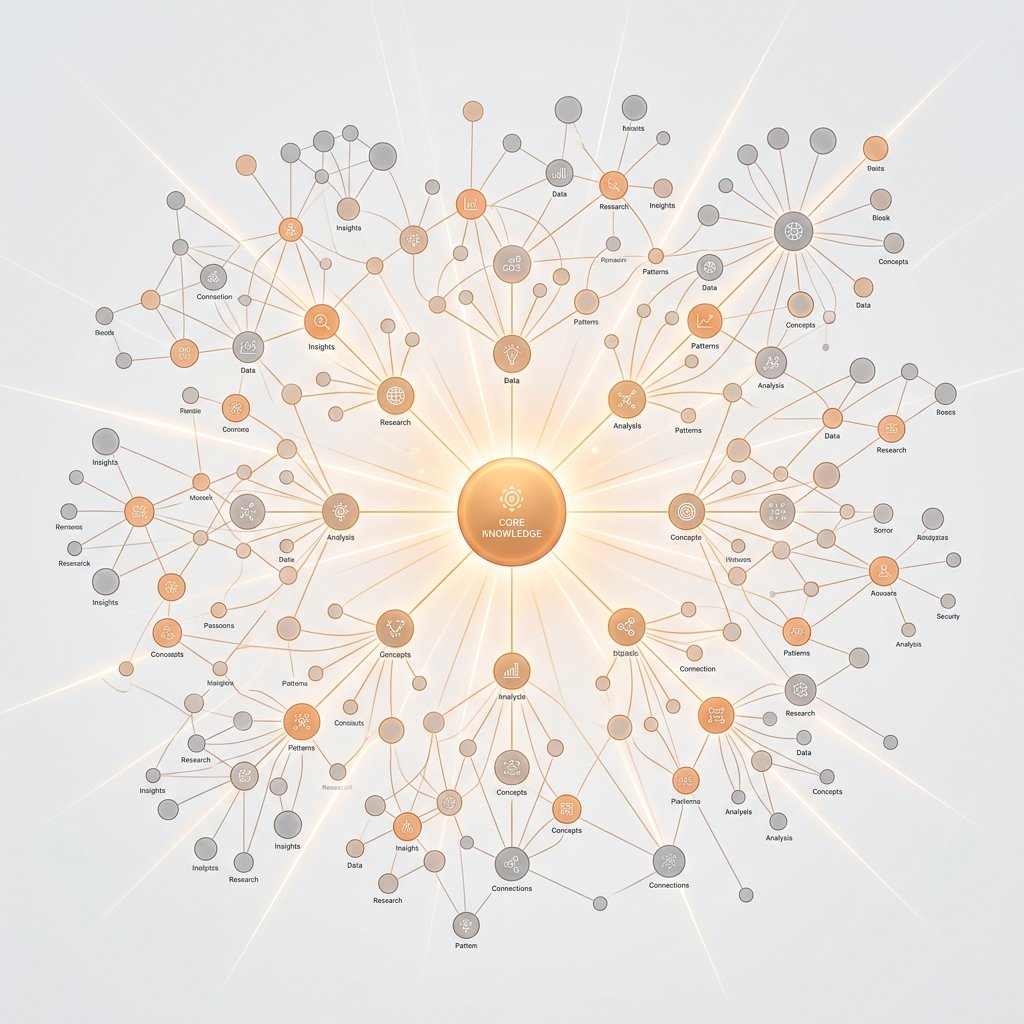
If you want to understand the future of search, you have to look beyond the search bar and into the ‘brain’ of the algorithm. For the past few years, I’ve been obsessed with how Google shifted from being a massive index of pages to an interconnected graph of ‘entities’. Today, search engines aren’t just looking for words; they’re looking for things. If your brand, your name, or your specific area of expertise isn’t recognized as a distinct entity in Google’s Knowledge Graph, you are essentially invisible in the modern search landscape. In 2026, the stakes are higher than ever as AI models use these entities to determine who to cite as a reliable source.
At digitalsuccesslane.com, we talk a lot about success, but you can’t have success today without extreme visibility. Visibility is no longer just about ranking on page one; it’s synonymous with being a verified ‘node’ in a massive digital knowledge graph. In this guide, I’m going to share the technical and strategic steps I use to help my clients claim their space in the Knowledge Graph. It’s a complete fundamental shift from asking ‘How do I rank for this word?’ to instead asking ‘How do I prove I am the definitive expert on this topic?’.
What is an Entity and Why Does It Matter?
In simple terms, an entity is a person, place, thing, or concept that is well-defined and uniquely identifiable. Google uses these specific entities to build its Knowledge Graph – a massive, multi-dimensional database that understands how different concepts relate to each other in the real world. For example, if you search for ‘Apple’, Google’s NLP models know immediately if you mean the fruit, the tech giant, or the record label based on the entities that surround your specific search query.
This matters immensely because Google uses this graph to power its most advanced features: Knowledge Panels, rich snippets, and the new AI Overviews. If Google recognizes you as a verified entity, it’s much more likely to prioritize and trust your content over an unknown source. It’s like having a permanent verified badge from the search engine itself. Without this recognition, you’re just another voice in a very loud crowd, no matter how many latent semantic indexing for better search rankings tactics you might try to implement. True authority comes from being ‘known’ by the machine.
Step 1: Establishing Your Entity’s ‘Home Base’
Google needs a single, authoritative, and unambiguous source of truth for your entity. This should always be your website’s homepage. To help the algorithm understand who you are, your ‘Who we are’ and ‘About Us’ pages need to be exceptionally clear, factual, and easy to parse. You should state your mission, your founders, your founding date, and your physical or digital location in the most simple terms possible. Avoid corporate speak and be direct.
Consistency is your absolute best friend in this process. If your brand name is ‘Digital Success Lane’ on your website, it should be ‘Digital Success Lane’ on your LinkedIn, your Twitter, your local business listings, and any industry directories. Even a small variation like ‘Digital Success Lane LLC’ versus ‘Digital Success Lane’ can cause what we call ‘entity fragmentation’. This is where Google sees multiple weak signals instead of one strong, cohesive one. I always tell my clients that a unified brand presence is an essential Client Acquisition Strategy, as it builds the institutional trust that high-ticket customers and sophisticated algorithms look for before they engage.
Step 2: Advanced Structured Data: The Machine-Readable Handshake
If your website content is designed for humans, your schema markup (specifically JSON-LD) is the handshake you offer to the bots. This is how you explicitly and legally define yourself: ‘This is me, this is what I do, and I am related to these other entities.’ In 2026, basic schema is simply the entry fee. To win, you need to use more granular, interconnected properties like `@id` and `sameAs`.
The `@id` property is critical because it provides a unique, permanent identifier for your entity – usually your primary website URL. Think of it as your digital social security number. The `sameAs` property is even more powerful; it allows you to link your site directly to authoritative external ‘nodes’ like Wikidata, Wikipedia, or your official, verified social media profiles. This creates a ‘web of trust’ that helps Google verify your identity through third-party correlation. You can find detailed technical documentation on how to implement these on the official Google Search Central site. Don’t leave this to chance; use the Rich Results Test constantly to ensure your code is being perfectly interpreted by the crawlers.
Step 3: Building a ‘Mini Knowledge Graph’ with Content Clusters
Once your identity is established and verified, you need to prove your topical expertise. You do this by building content clusters that mirror the structure of Google’s own knowledge graph. Instead of writing random blog posts about whatever comes to mind, you create a central pillar page and surround it with dozens of related spoke articles that answer every possible question a user might have.
We’ve already discussed the basics of how to build a topic cluster for semantic seo, but in the context of entity optimization, the specific goal is to cover all the ‘attributes’ and ‘related concepts’ of your main entity. If your main entity is ‘SEO Consulting’, your sub-articles should cover related entities like ‘Keyword Research’, ‘Technical Audits’, ‘Link Building’, and ‘Competitive Intelligence’. By interconnecting these pages through highly contextual internal links, you are providing Google with a manual for your niche. This incredible topical depth signals to the algorithm that you are a highly authoritative source deserving of a place in the Knowledge Graph.
Step 4: Optimizing for Entity Salience and Contextual Proximity
Google doesn’t just look for entities; it looks for ‘salience’ – the relative importance and prominence of an entity on a specific page. To improve your entity salience, you need to use clear, descriptive headings and place your primary entities early in your text (the ‘inverted pyramid’ style of writing). I also use a technique called ‘contextual proximity’ or co-occurrence. This involves placing related entities near each other to strengthen the semantic bond.
For example, if I’m writing about ‘Knowledge Graph optimization’, I ensure that terms like ‘knowledge panel’, ‘structured data’, ‘entity mapping’, and ‘semantic web’ appear in the same paragraph or section. This proximity helps Google’s natural language processing models, especially those based on transformer architecture, understand the deep context of your writing. It’s also important to cite and link to other authoritative entities. When I mention Schema.org or Wikidata, I link to them. This doesn’t ‘leak’ your authority; it reinforces it. It shows the search engine that you are a well-informed part of a larger, trustworthy network of information.
Step 5: Claiming and Managing Your Knowledge Panel
If you’ve done the work correctly over a period of months, eventually Google will grant you a Knowledge Panel – that visual box on the right side of the search results that contains your facts and information. This is a massive milestone in your SEO journey. Once it appears, you must claim it immediately. This gives you the direct ability to suggest edits, verify facts, and even choose the primary image that represents your brand.
Managing your panel is a continuous, living process. You should regularly update your business description, ensure your social links are all correct, and monitor it closely for any inaccuracies that might crop up. This is your digital billboard, and in an AI-driven search world, it’s often the very first thing a potential client or partner sees. Having a verified, well-maintained panel is a powerful sign of authority that can significantly boost your brand trust and click-through rates. It’s the ultimate validation of your hard work.
The Future of the Graph-Driven Web
As we move further into 2026, the lines between a ‘website’ and a ‘structured data source’ are becoming increasingly blurry. AI answer engines and virtual assistants are pulling information directly from the Knowledge Graph to answer user questions in real-time. If your brand or your expertise isn’t in that graph, you’re missing out on the biggest shift in search behavior since the invention of the hyperlink.
Entity optimization isn’t just about SEO anymore; it’s about establishing your permanent digital presence. It’s about ensuring that every piece of data you put online is correctly attributed to you and works toward building your overall authority. It takes time, technical precision, and a strategic mindset, but the rewards are a level of visibility and trust that keywords alone could never provide. Start with your ‘Home Base’, nail your JSON-LD schema, and build the clusters that prove you are the definitive expert in your field. Google is rebuilding the web as a graph – make sure you’re one of the strongest nodes on digitalsuccesslane.com.
Earning Your Place in the Global Digital Brain
Remember, Google’s ultimate mission is to organize the world’s information and make it universally accessible and useful to everyone. By optimizing for entities, you are actively helping the search engine achieve that goal. You’re making its job easier by providing structured, unambiguous data, and in return, it will reward you with authoritative rankings and consistent traffic.
This is not a ‘set and forget’ project; it’s a fundamental new way of thinking about your entire digital content strategy. Every time you write a new post, or update an old one, ask yourself: ‘Does this clarify an entity or a relationship for the machine?’ If the answer is yes, you’re on the right track. Stick with it, stay consistent, and watch as your brand evolves from a simple website into a recognized authority that even the world’s most powerful AI models can’t ignore. This is the ultimate path to true digital success in an entity-first world.
Leave a Reply